
EU F-Gas Ban Tightens HVAC Procurement





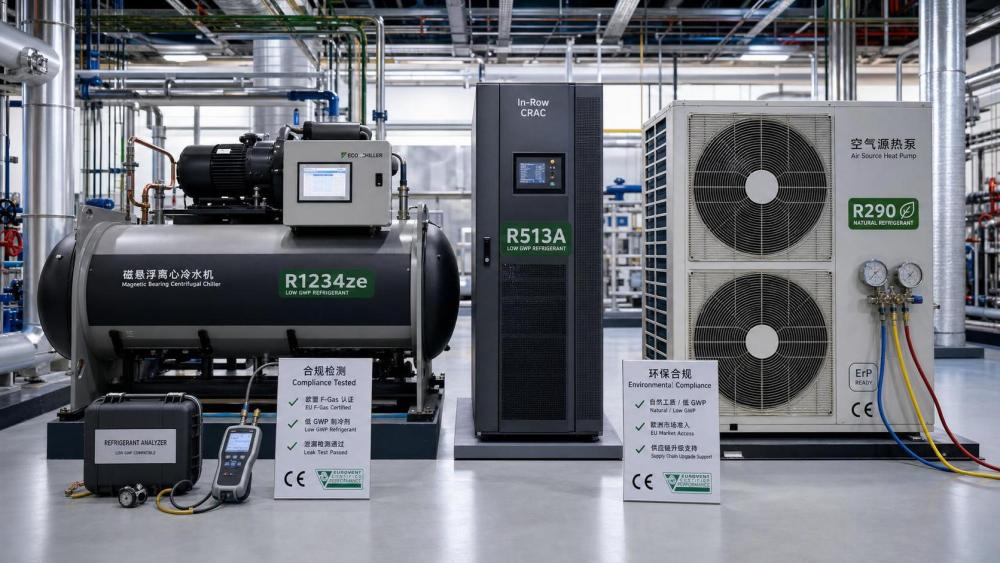
On July 1, 2026, the EU began enforcing tighter restrictions under revised F-Gas Regulation (EU) 2024/573, with new bans on the use of R134a and R404A in new chillers, CRAC units, and heat pumps. The change matters immediately for importers, equipment suppliers, procurement teams, and compliance-related service providers dealing with Magnetic Bearing Centrifugal Chillers, In-Row CRAC Systems, and Air/Ground Source Heat Pumps, because product selection and delivery readiness now depend on alternative refrigerant routes and certified leak detection arrangements.
What Has Taken Effect on July 1
According to the provided information, the EU has enforced stricter bans on high-GWP refrigerants under revised F-Gas Regulation (EU) 2024/573 as of July 1, 2026. The ban covers the use of R134a and R404A in new chillers, CRAC units, and heat pumps. The change directly affects procurement of Magnetic Bearing Centrifugal Chillers, In-Row CRAC Systems, and Air/Ground Source Heat Pumps by EU importers. The same information also states that compliance now requires systems based on R290, R1234ze, or CO₂, together with certified leak detection.
Where the Immediate Pressure Appears in the Supply Chain
Import-side equipment screening becomes more restrictive
From an industry perspective, EU importers are likely to face the earliest impact because procurement decisions for covered product categories can no longer rely on configurations using R134a or R404A in new equipment. The practical effect is concentrated in model selection, technical specification review, and supplier qualification. What deserves closer attention is whether product documentation, bid materials, and configuration sheets clearly align with the refrigerant and leak detection requirements referenced in the provided event summary.
Manufacturers and exporters face specification alignment pressure
Analysis shows that manufacturers and export-oriented suppliers involved in chillers, CRAC units, and heat pumps may be affected where existing offerings are still centered on the banned refrigerants for new units entering the EU market. The main pressure point is not only product design, but also whether commercial quotations, technical submissions, and delivery packages reflect compliant refrigerant options such as R290, R1234ze, or CO₂-based systems. For cross-border transactions, this also raises the importance of checking whether technical files and contract specifications remain consistent with current EU-facing procurement requirements.
Compliance and testing-related service work may move closer to the transaction stage
Observably, the reference to certified leak detection means compliance-related review is no longer limited to the refrigerant choice alone. Certification-related firms, testing support providers, and parties preparing technical evidence may see more attention on supporting documents tied to leak detection arrangements. The direct business effect is likely to appear in pre-shipment review, tender support, import documentation checks, and acceptance-stage verification, although the provided information does not define the exact enforcement workflow.
Procurement and after-sales teams may need to revisit delivery assumptions
For procurement teams and after-sales service participants, the issue is not only whether a unit can be ordered, but whether the delivered configuration matches the compliance path expected in the EU market. Analysis shows that purchase planning, substitution decisions, and service-readiness assumptions may all need review where legacy refrigerant preferences were still embedded in project documents or internal standards. This is especially relevant for buyers handling covered HVAC and thermal management equipment categories named in the event summary.
Operational Points Companies Should Recheck Now
Review refrigerant specifications in active quotations and tenders
Companies with active EU-facing projects should recheck whether current quotations, tender responses, and technical schedules still reference R134a or R404A for new chillers, CRAC units, or heat pumps. Where those references remain, the immediate concern is alignment with the newly enforced restrictions described in the provided information.
Check whether technical files support the compliance route claimed
What deserves closer attention is whether the product file clearly supports one of the refrigerant pathways identified in the event summary: R290, R1234ze, or CO₂-based systems. Companies should also verify whether certified leak detection is reflected consistently in technical documentation, product descriptions, and procurement attachments, because the provided information presents this as part of the compliance requirement.
Reconfirm supplier readiness before shipment or award
Analysis shows that supplier qualification now needs to focus more directly on configuration readiness for EU-bound orders in the affected product groups. In practical terms, importers and buyers may need to reconfirm with suppliers whether the quoted unit is the same unit that can be shipped, documented, and accepted under the new restriction framework described in the event summary.
Watch for changes in procurement wording and acceptance documents
Because the provided information does not include detailed enforcement language beyond the stated ban and compliance direction, companies should continue to watch how procurement documents, technical bid wording, and acceptance requirements are expressed in actual transactions. It would be premature to treat every downstream execution detail as settled without further official or market-facing clarification.
Why This Looks Like an Execution Signal, Not Just a Policy Reminder
Observably, this development is better understood as a rule already moving into procurement and delivery practice, rather than a distant policy discussion. The key reason is that the provided information ties the restriction directly to named equipment categories and to an immediate compliance path based on alternative refrigerants and certified leak detection. At the same time, analysis shows there is still a need to observe how detailed compliance interpretation will appear in technical reviews, tender documents, and market acceptance criteria.
How the Market Should Read This Stage
At this stage, it is more appropriate to understand the July 1, 2026 development as an implemented compliance change with direct implications for product selection and transaction readiness in affected HVAC equipment categories. The event does not, by itself, confirm every downstream commercial outcome, but it clearly signals that EU-facing procurement involving new chillers, CRAC units, and heat pumps can no longer treat R134a and R404A options as routine. The most rational reading is that compliance alignment now moves closer to the front end of procurement, documentation, and delivery planning.
Basis of This Article and What Still Needs Verification
This article is based on the user-provided news title, event date, and event summary. For developments of this kind, commonly relevant source types may include official regulatory notices, publications from supervisory authorities, customs or trade administration information, industry association updates, standards organization documents, and reporting from established professional media. No specific official source link was provided in the input, so the exact official reference path still needs to be verified on an ongoing basis. Observably, the market should continue tracking any further detail on policy interpretation, certification practice, procurement wording, tender document changes, industry feedback, and company-level implementation.
Related News
- 00
0000-00
HVAC Compliance Requirements for Laboratories: A Design and Verification Guide - 00
0000-00
How to Estimate ASHRAE Compliance Costs for HVAC Retrofit Projects - 00
0000-00
ASHRAE 90.1 Chiller Efficiency Requirements: How to Evaluate Compliance - 00
0000-00
When Does a Facility Need an HVAC Compliance Consultant? - 00
0000-00
How HVAC Decarbonization Consultants Help Cut Emissions in Commercial Retrofit Projects
Dr. Elias Vance
Weekly Insights
Stay ahead with our curated technology reports delivered every Monday.